Nuke 17 Release
(and Why It Matters for VFX Pipelines)
With the release of Nuke 17, Foundry has delivered one of the most substantial updates to its compositing tool in years. This iteration moves far beyond incremental tweaks; it rearranges how compositors interact with USD, 3D data, machine learning, performance, and core rendering, all in ways that matter in today’s production pipelines.
For artists and studios who depend on Nuke for high-end episodic and feature work, the value isn’t just in new nodes, it’s in workflow clarity, integration fidelity, and performance gains that scale from single shots to full sequences.
Below we break down the most impactful changes you’ll find in Nuke 17, explained for professionals who want to know not just what is new, but why it matters.
A Modernized 3D System Built for USD
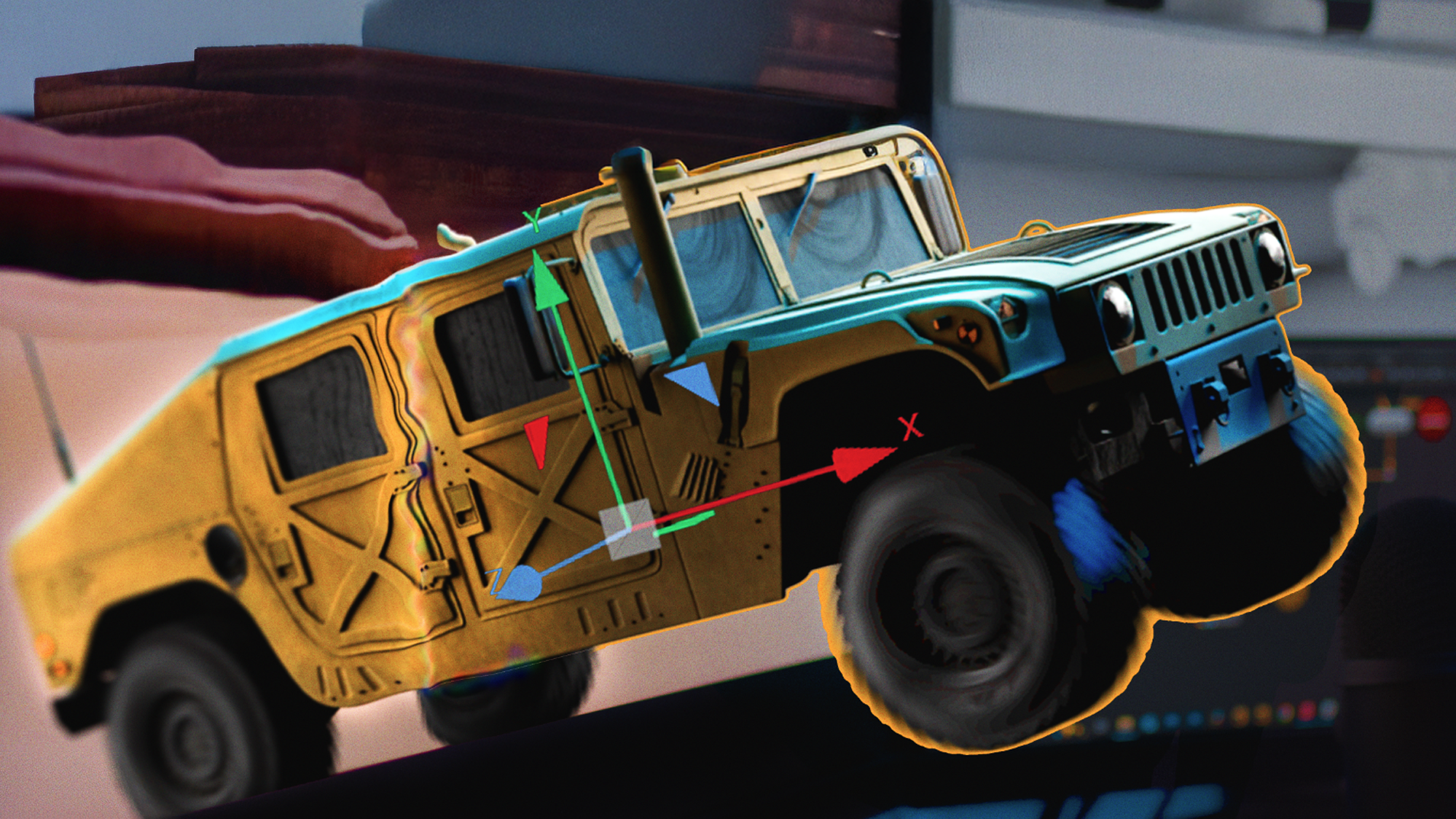
At the heart of Nuke 17 is a rebuilt USD-based 3D system that’s no longer experimental — it’s production-ready. This update brings greater control over scene graph data, more intuitive imported workflows, and tighter integration with real-world pipelines. Selective Import and Scene Graph Control
In previous versions, importing USD scenes could be a heavy, all-or-nothing process. In Nuke 17, the GeoImport workflow now lets you preview and customize what gets loaded:
- Load or unload payloads
- Activate or deactivate individual prims
- Filter by primitive type
- Set graph depth before import
This prevents unnecessary data from slowing down your comp and gives you precision control over what parts of a complex USD scene actually matter for your shot. Once imported, the new Scene Graph tab in GeoImport allows you to tweak your selection without re-importing. That’s a real time saver when iterating through layout changes or lighting revisions.
Native Gaussian Splats — Volumetrics in the Viewer
One of the stand-out additions in Nuke 17 is native support for Gaussian Splatting — a volumetric asset format that has gained traction in virtual production and environment capture workflows. Gaussian Splats differ from traditional polygon or voxel representations by treating a scene as a dense field of radiance "blobs." Each splat carries colour, opacity, and shape data and can be manipulated almost like geometry in the 3D system.
In practical terms:
- Splats can be imported via GeoImport or GeoReference nodes.
- A new SplatRender node enables direct rendering with motion blur and depth outputs, which integrates cleanly into a composite.
- Manipulating and masking volumetric splats uses new Field nodes — such as FieldShape, FieldCrop, FieldMix, and others — giving you non-destructive control over dense data inside the nodegraph.
For environment work, set extensions, or reconstructions from photogrammetry and capture systems, this means you no longer need to round-trip splat assets through external tools. They can now live natively inside Nuke, be transformed, graded, merged, and composited alongside CG and live-action elements.
USD Cameras, Lights, and Materials — Work Like the Rest of Your Pipeline
Nuke 17 expands native support for USD workflows across cameras, lights, and materials, aligning compositing more closely with lookdev and lighting stages in other DCCs
Cameras The updated 3D system allows:
- Direct editing of USD cameras via a GeoEditCamera node.
- Passthrough of live USD attribute data so camera changes in upstream packages propagate correctly.
- Improved visualization and interaction with cameras inside Nuke’s 3D viewer.
For VFX artists working with layout or previs data, this means more reliable matches between comp and upstream camera work, with fewer guess-correct cycles.
Lights New light workflows provide:
- Real-world terminology in light parameters
- Direct editing of USD light prims inside Nuke
- Expanded controls for intensity, falloff, colour temperature, and shadows.
These adjustments help compositors simulate lighting conditions that match set photography or CG lighting more faithfully, without needing to fake or approximate values.
MaterialX and the MtlXStandardSurface Node
For the first time in Nuke, a MaterialX Standard Surface shader node lets you preview and render materials with a consistent shader model, visible in the Hydra viewer and rendered through ScanlineRender2. This confirms a shift toward USD- and MaterialX-aligned lookdev workflows, reducing the friction when moving between lookdev/render packages and Nuke.
BigCat: Scaling Machine Learning in Production
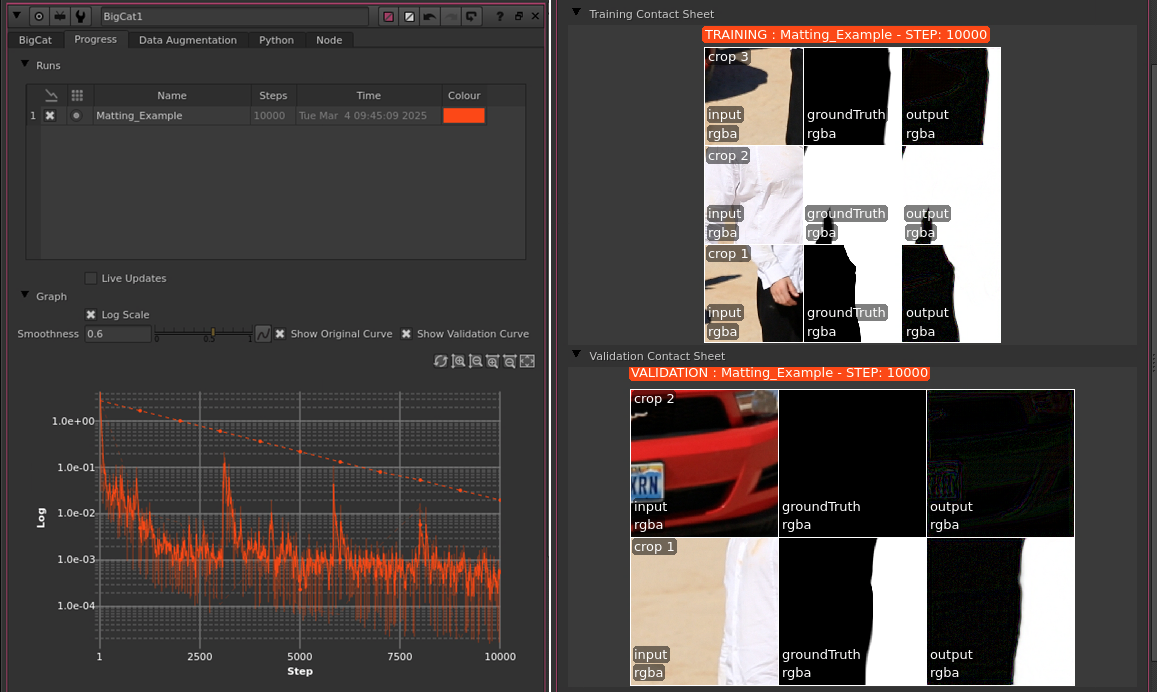
Nuke 17 also introduces BigCat, an extension of the existing CopyCat system that scales ML workflows beyond single-shot training. While CopyCat lets you train models for matte or task generation on a per-shot basis, BigCat is designed to train across tens or hundreds of images, supporting:
- Data augmentation
- Validation workflows
- Custom loss functions for better model quality
This is a meaningful upgrade for studios looking to create reusable AI tools trained on their own data — for example, training a model on a full film’s rotoscoping plates to automate cleanup across similar sequences.
Graph Scope Variables: Live Control Throughout the Node Graph
Graph Scope Variables (GSVs) — the backbone of multishot workflows introduced earlier — get a production-ready update in Nuke 17. They now support 3D nodes and allow Python callbacks and API hooks that can be triggered by variable events. This unlocks dynamic content changes inside a comp:
- Swap geometry
- Swap textures
- Swap cameras
…based on variable logic without duplicating scripts or nodes. For multi-view or multi-variant editorial sequences, GSVs provide a powerful way to manage complex variations efficiently.
New Annotation System: Streamlined Review and Collaboration
Collaboration and review workflows see substantive improvements in Nuke Studio:
- A new Annotations Panel centralises all notes and comments across playback.
- Annotation brushes get pressure-sensitive controls and blending modes.
- Timeline markers now show contextual frames and allow easy navigation.
These refinements help compositors and reviewers communicate intent visually without leaving the timeline or viewer.
Performance Gains and Core Pipeline Updates
Beyond bells and whistles, Nuke 17 brings performance improvements that matter on real sequences:
- Deep compositing renders up to 1.88× faster to both disk and viewer.
- GPU upscaling via the TVIScale node can be up to 98× faster than previous builds.
- Native ACES 2.0 support out of the box for both Studio and CG colour workflows, aligning with modern HDR/SDR pipelines.
- OFX plugins run without artificial resolution limits — performance now depends on hardware.
- New codecs and format support like NotchLC and YCbCr MOV handling across platforms.
These optimisations are the type of upgrade that speeds up day-to-day work, especially on large multi-shot compositing tasks.
What This Means for Your Workflow
Integrating more USD control, native volumetric support, scalable machine learning, and more intuitive 3D workflows means:
- Less guesswork
- Fewer workarounds
- Higher fidelity outputs
- Stronger alignment with upstream pipeline tools
For studios and senior artists, these changes reduce friction between departments and keep more of your work inside a single compositing context, but without compositing at the expense of control. That’s a real shift in how a node-based tool serves modern VFX production.
See It in Action
Want a deep dive into how these features behave on real shots? 🎥 Watch our full Nuke 17 overview tutorial
In it, we take real-world examples and show these updates where they matter most: in clean integration with practical elements, lighting consistency, and scalable workflows that hold up under review.