Simon Jokuschies On Python & AI
Why Every Nuke Artist Is Leaving Time on the Table
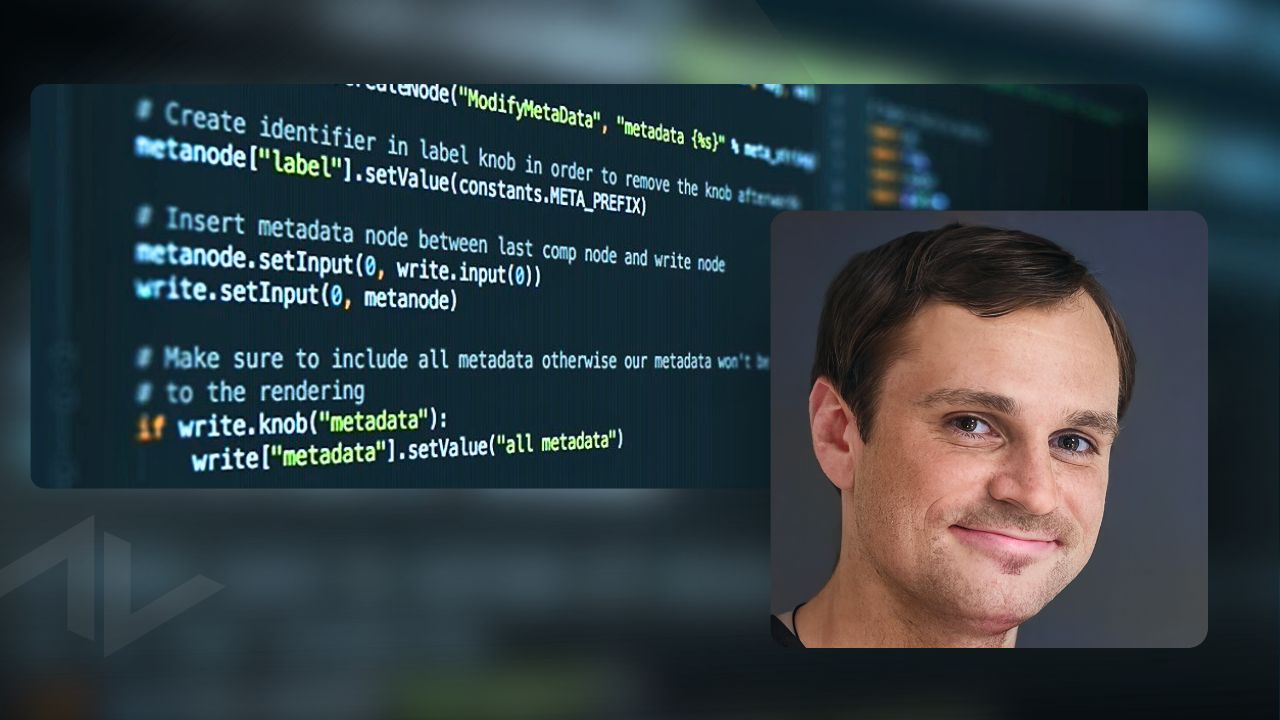
There's a version of Nuke that most compositors never see. It's not hidden, it's built right into the software. It's the layer beneath the nodes, the engine that Foundry deliberately left open. It's Python. And according to Simon Jokuschies, a pipeline engineer and compositor with over 20 years of programming experience, most artists walking past it every day have no idea what they're missing. Simon is the instructor behind ActionVFX Academy's new course, Python & AI Integration for Nuke, a course designed to take Nuke artists from zero Python knowledge to building their own production-ready tools, including an AI-powered editing gizmo built entirely inside Nuke. We sat down with Simon to talk about why he built this course, what he sees artists getting wrong, and what the industry is actually demanding right now.
Two Passions, One Tool
Simon didn't come to Nuke the way most compositors do. He came to it as a programmer first. "I've always been fascinated with film and the magic of combining images, but also programming and the technical side of things," he says. "And I've been programming for over 20 years now." When he first opened Nuke back in 2011, he already had years of coding behind him. The moment he discovered Python support inside it, something clicked. "That was the moment where I realized, man, this combines both my passions. This is what I want to do. Film on the one side and programming on the other side. Nuke and Python is the perfect combination and very, very powerful."
That combination has shaped his entire career. Simon has spent years working as a pipeline engineer, building and maintaining the kind of tools that studios depend on to keep shots moving, the infrastructure that most artists never think about until something breaks. He knows the difference between code that works and code that lasts.
What You're Actually Losing Without Python
The premise of the course isn't that Python is a nice-to-have. Simon's view is more direct than that. "A compositor without Python skills actually loses out on several things."
He points to the small repetitive tasks that accumulate across a working day — the kind of friction that feels minor in isolation but adds up over time.
"It's oftentimes the small things that can make a real impact here when starting to automating these. And these small things quickly add up. So for example, think about setting up certain knobs over and over and over again, when you can actually automate that process and create proper knob defaults. Or let's say bulk updating multiple working faults automatically, instead of opening these manually by hand. There are so many different things that can be automated. So you can actually save you quite a lot of time and energy by automating that."
The case Simon makes isn't abstract. It's time. It's the hours you're currently spending doing by hand what Python could handle in seconds.
The Problem With How People Learn Python Now
Simon has thought carefully about why most self-taught Nuke Python attempts fail — and he's identified two main culprits. The first is outdated material. "There are quite a lot of outdated sources out there. And you should definitely no longer learn Python too anymore." The language has moved on. Modern Python features — type annotations, F-strings, dataclasses — are powerful, widely used in production, and largely absent from the tutorials most artists find on forums. The second issue is more fundamental, and more common.
"Oftentimes I see artists creating tools that work, but they are not really maintainable and have some low code quality. It's important to understand that efficient and maintainable code is really key here. So that we have tools that can last for a very long time instead of quickly breaking in real production environments." There's a specific tension Simon flags around the current wave of AI coding tools. He uses them himself — but with clear eyes about what they're actually doing.
"I use LLMs all the time, but you need to understand that there's a difference between code that is quickly put together and some kind of works, but it will be very hard to maintain in the long term. Versus structured code that is maintainable, scalable and performant. Getting things quickly out will probably not save you in the long term here. So you should better have a deep understanding of what you are actually doing here."
This is the heart of what separates Simon's course from a vibe-coding workshop. The goal isn't to get something running by Friday. The goal is to understand what you're building well enough to keep building on it.
What the Course Actually Covers
The course runs across nine modules, structured to bring a complete beginner through Python fundamentals, Nuke's API, custom menus and callbacks, object-oriented programming, GUI design, and ultimately into AI integration, all grounded in practical, buildable tools at every stage.
"This course is primarily for all Nuke artists out there who are interested to take the next level and gain technical knowledge. So after an introduction to the Python syntax and programming concepts, we'll apply these concepts and start to create small tools, graphical user interfaces, and also AI driven tools inside Nuke." Crucially, Simon also designed the course with transferability in mind. The Python foundations he teaches aren't locked to Nuke. "You can actually very easily adapt these Python basics that I show you in this course to other DCCs like Houdini, Blender, Maya, Silhouette, and so on as well."
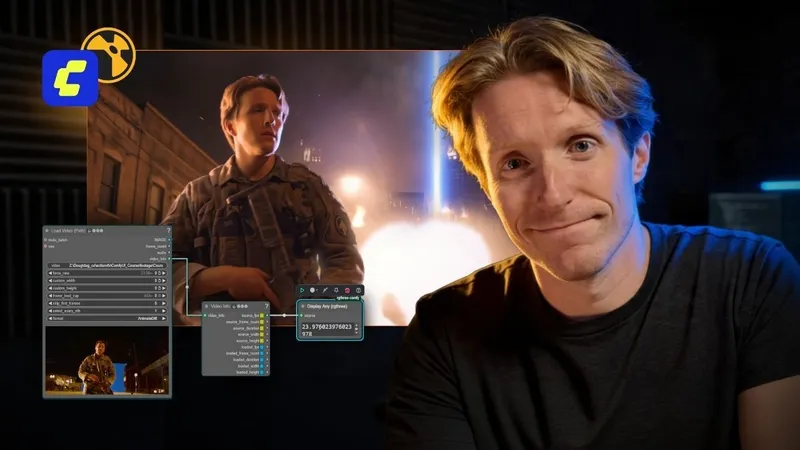
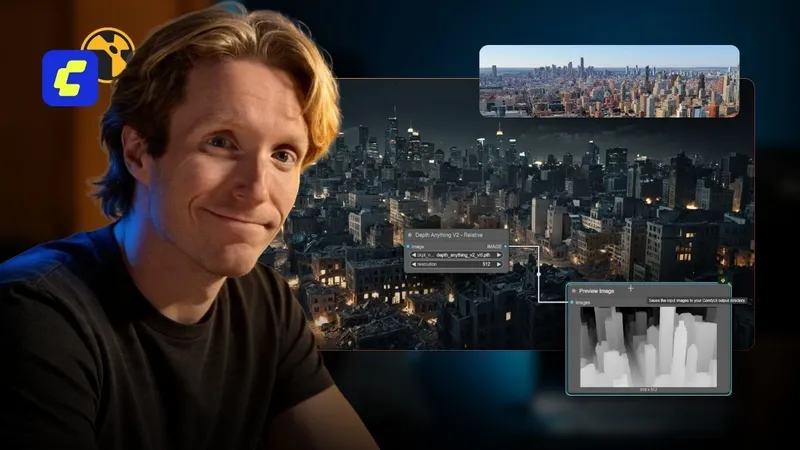
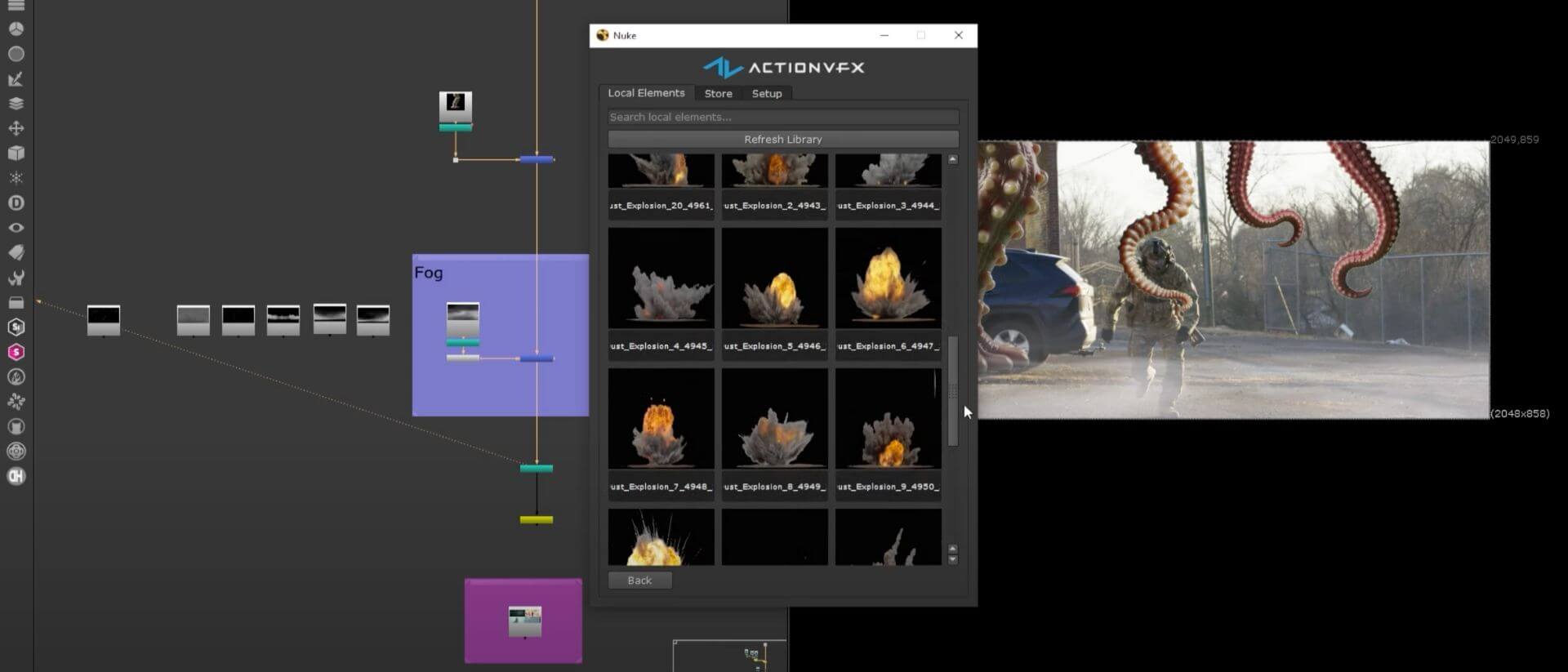
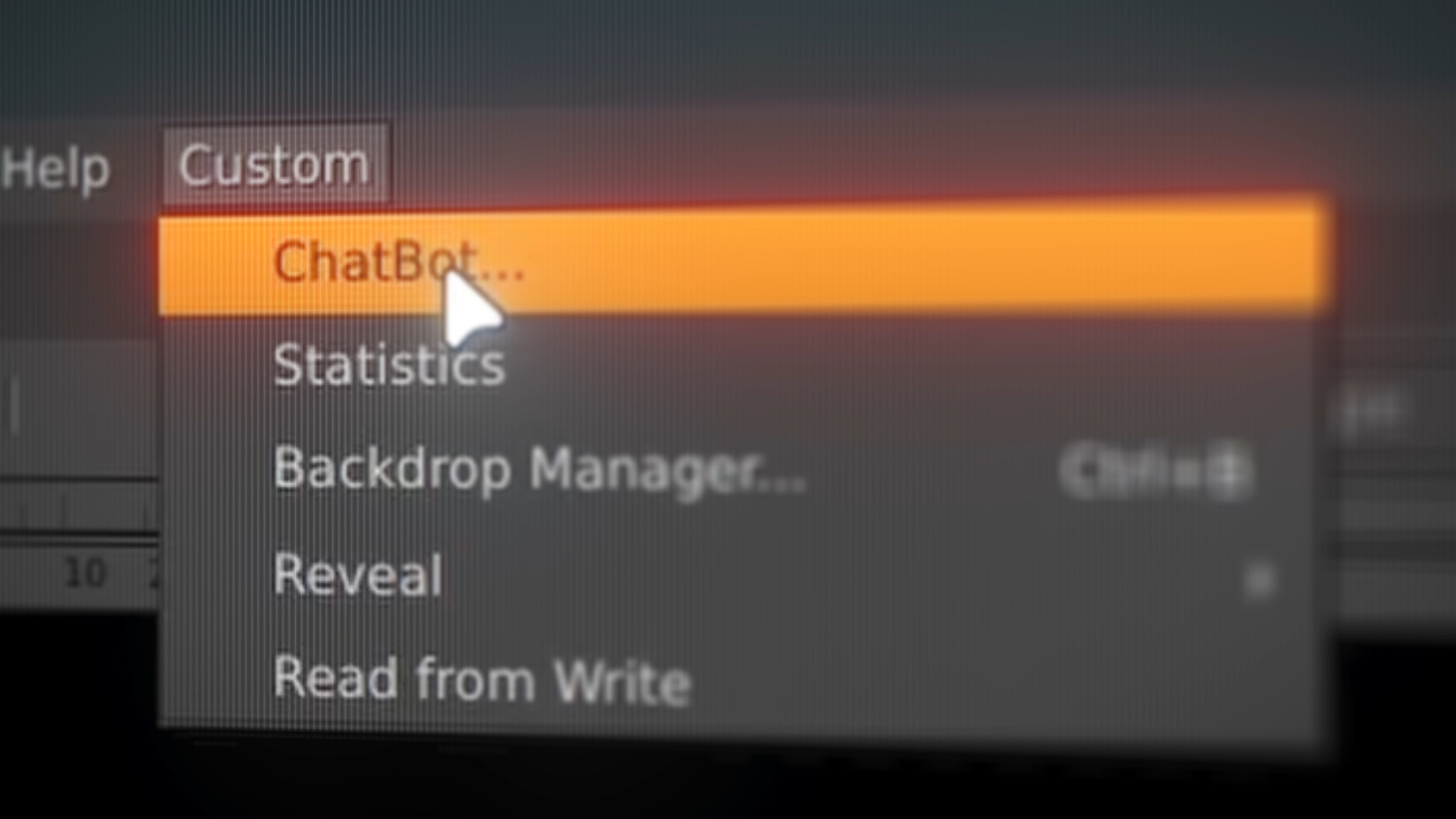
The course culminates with two advanced modules that reflect where the industry is heading: building a ChatBot integrated directly inside Nuke using the OpenAI API, and constructing an AIEdit gizmo that allows artists to edit images inside Nuke using text prompts and masks. Simon's perspective on the AI side of things is worth hearing directly. "AI is such a hot topic at the moment. But it is also very controversial in the visual effects industry. And there's a good reason for that because no one really knows on how much stolen data pretty much all models were trained on. And everybody seems to be an annoying AI expert nowadays."
He's not selling AI as a revolution. He's selling the understanding you need to actually use it well.
"AI offers quite some interesting features if you know how to use it correctly. And let's actually face it, AI will probably not go away. So you should definitely learn how to use it to your advantage. But don't forget that this is pretty much yet another tool on your tool bed."
What You Walk Away With
By the end of the course, students will have built a mono repository of Nuke tools they can deploy immediately — and, more importantly, a foundation solid enough to keep extending on their own.
"After having finished the course, the student will have a mono repository with some time saving tools, but definitely more important thing here is that they will have a solid base on programming and the knowledge on how they can extend this mono repository and create their own tools inside it. And they will not be afraid of prompting an LLM for some code snippets and then judge the quality on the LLMs output and change it to the needs to integrate it into their code."
That last point matters. The course doesn't just teach you to write Python — it teaches you to evaluate what Python is doing. In an era where everyone's vibe-coding, being the person in the room who actually understands the output is a real competitive advantage.
Simon also makes a case that Nuke artists are more prepared for this than they think. "If you're able to understand node based workflows in Nuke, you should definitely be able to understand Python as well. And that is because Python is actually not very complicated as one might initially think. And that is actually the beautiful thing about Python. It is easy to learn and yet very powerful. And I'm convinced everybody who is willing to learn can actually learn Python."
His goal for the course is to make that accessible, not to drown beginners in theory, but to get them building from the start. "I will put a definitely a focus on making this an easy to follow along course that everybody can understand, even if you have never programmed before. We will start small and then expand our knowledge and start creating larger tools over time." What he wants students to feel when they finish the final lesson is specific. "Once people finish the last lesson, I want them to feel very confident creating their own tools. And with this course, I'm sure they will."
Why Now
The timing of this course isn't arbitrary. Studios are running leaner. Pipelines are evolving fast. The artists who stand out aren't just the ones who can composite, they're the ones who can solve problems, build tools, and make the people around them more efficient. As Simon puts it: "So should you learn programming nowadays? Absolutely." Python & AI Integration for Nuke is available now on ActionVFX Academy. Whether you've never written a line of code or you're an experienced compositor looking to formalise your scripting knowledge, this is where you start.